
Close
We’ve meticulously crafted each day to ensure you enjoy the ultimate experience. From delving into historical landmarks to savoring delectable local flavors, every moment is filled with adventure and thrill. Come along with us as we embark on a journey through some of the most captivating Africa destinations .
You will be picked up at the Kilimanjaro International Airport and transferred to your arranged hotel in Moshi town, you will meet your guide who will brief you on your upcoming trek and do an equipment check to make sure you have all the necessary mountain gear. Gear which is missing can be rented on this day.
At 8am leave Moshi for Umbwe Gate where you will meet our porters, guides, and cooks who will spend the next six days trekking with you to Uhuru Peak, the roof of Africa. After arriving, wait at the gate while we register your climb and the porters and guides make final preparations. Your first day’s destination is Cave Bivouac Camp, approximately 6 hours from the gate. The trail is steep and can be slippery in some places.Hike through the moss-covered trees of Kilimanjaro’s cloud forest. The forest will thin later in the hike and heathers, tall grasses and wildflowers will come into view. Porters and cooks will walk ahead to set up the camp in time for your arrival.
The first section of the trail continues following the ridge. After leaving the forest, continue through open moorlands until reaching Barranco Camp. Barranco is generally regarded as the most scenic campsite on the Umbwe Trail as it’s surrounded by giant senecios and lobelias. As Barranco is in a valley, the sun rises later than at the other camps.
Extra Day for Acclimatization. Adding this day will ease your effort, and amplify your acclimatization.
Leave Barranco Camp after breakfast for Karanga Valley. The day begins with a 1.5 hour scramble up the Barranco Wall. This is the hardest part of the day and in some places you may have to use your hands to aid your climb. After reaching the top, hike through fairly level terrain before making a short but steep descent into the green Karanga River Valley.
After breakfast, begin the hike to Barafu Camp. On the way to Barafu, view several of Kibo’s glaciers as well as the junction that connects the descent route, Mweka, with the Machame trail. During day four, hike by the Heim, Kersten and Decken Glaciers. Although the trail to Barafu passes through alpine desert with little vegetation, Barafu Camp offers stunning views of Kibo and Mawenzi peaks. Try to sleep after finishing dinner as you will wake before midnight for your summit hike.
Around midnight, begin the final ascent to Uhuru Peak. Hike by the light of your headlamp for the next six hours. The ascent to the crater rim is the most challenging part of the entire trek. The trail is very steep until you reach the crater rim at Stella Point.
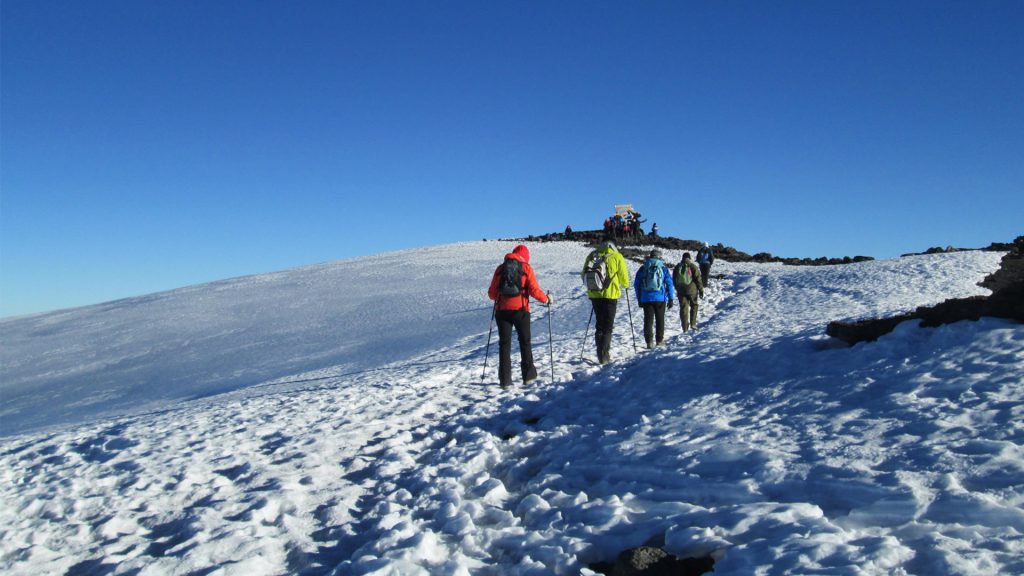
The hike from Stella Point to Uhuru Peak is a gradual climb and, as far as hikes go, not very difficult. The altitude, however, makes the hike long and tiring. The crater rim hike takes approximately one hour. Upon reaching Uhuru, take photos of your guide and group at the peak before beginning the descent to Mweka Camp. On the way down from Uhuru, enjoy views of the mountain, crater, clouds and glaciers.
At Barafu Camp, eat breakfast and take a short break. You still have another three to five hours to go before reaching Mweka Camp.
After breakfast, finish the trek with a hike through the forest to Mweka Gate. The trail may be slippery following rain. Our vehicles will meet you at the lower station of Mweka Gate to take you back to Moshi.
The day is left free to wind down after the trek before your flight home. Depending on flight times you could go and explore Moshi town and grab some souvenirs before heading to the airport.
*Safari, Zanzibar and other add-ons are available if you wish to continue exploring Tanzania.



Here are the commonly asked questions by our visitors. If there’s something crucial that we haven’t covered, please Contact Us. Our team is available to assist you at any time.
The duration of the climb varies based on the route chosen. Typically, it takes around 5 to 9 days to complete the ascent and descent, depending on the route and the climber’s pace.
Accommodations vary depending on the route. Typically, climbers stay in tents at designated campsites or huts along the trails. Some routes offer more basic camping experiences, while others have better amenities.
Essential gear includes proper hiking boots, clothing suitable for varied weather conditions, a sleeping bag, trekking poles, a daypack, and other personal items. It’s crucial to have proper gear for both warmth and protection against the elements.
Yes, it’s required to climb Kilimanjaro with a licensed guide and it’s highly recommended to hire porters for carrying equipment. Guides are familiar with the routes, provide safety, and understand altitude-related issues.
The best times are during the dry seasons: January to March and June to October. These periods offer clearer skies and more stable weather conditions, making the climb safer and more enjoyable.
Get your custom itinerary and request a quote.